The short version
- A forex trade buys one currency and sells another at the same time; prices are quoted as pairs such as EUR/USD.
- Moves are measured in pips and positions in lots, and most retail forex is leveraged, which magnifies losses as well as gains.
- Even a buy-and-hold investor has currency exposure: overseas shares gain or lose value in your home currency as exchange rates move.
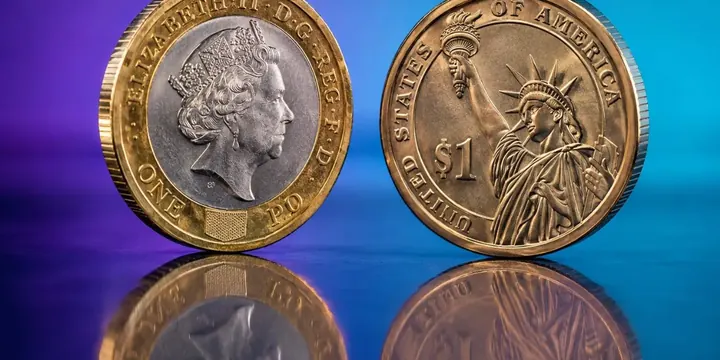
Understanding how forex trading works starts with one idea: every currency trade is a swap. When you buy euros with dollars you are, at the same moment, selling dollars. That is why currencies are always quoted in pairs, and why the forex market is less about whether a currency is "good" and more about how it compares with another one.
Reading a currency pair
In a quote such as EUR/USD 1.1000, the euro is the base currency and the US dollar is the quote currency. The number tells you how many dollars one euro buys. If the quote rises to 1.1100, the euro has strengthened against the dollar; if it falls to 1.0900, the dollar has strengthened.
Every quote actually has two prices. The bid is the price at which a dealer will buy the base currency from you, and the ask is the price at which it will sell to you. The gap between them is the spread, the main cost of most forex trades. On heavily traded pairs such as EUR/USD, USD/JPY and GBP/USD, spreads are usually narrow; on less traded pairs they are wider.
Who trades currencies, and why
Most currency trading has nothing to do with speculation. Importers pay suppliers abroad, multinational companies bring profits home, pension funds buy foreign shares and bonds, tourists change cash, and central banks manage reserves. Banks and dealers sit in the middle, quoting prices to one another and to their clients around the clock. Speculators, from hedge funds to individuals using retail brokers, are one group among many.
This matters because it explains why exchange rates respond to trade, interest rates and capital flows rather than to the opinions of small traders. A retail forex account is a very small boat on a very large sea.
How forex trading works for a private trader
Private individuals do not trade on the interbank market directly. They open an account with a retail broker, which quotes its own prices based on that market. In many countries the product is a contract for difference (CFD) or a rolling spot contract: you gain or lose the price change, but no currency is delivered.
Pips and lots
Because exchange rates move in small steps, the standard unit of movement is the pip: 0.0001 for most pairs and 0.01 for pairs quoted in Japanese yen. Trade size is measured in lots. A standard lot is 100,000 units of the base currency, a mini lot 10,000 and a micro lot 1,000. For any pair where the US dollar is the quote currency, one pip on one standard lot is worth $10. Our pip calculator works this out for other pairs.
Leverage and margin
A broker lets you control a large position with a smaller deposit called margin. In the UK, the EU and Australia, retail clients are limited to leverage of 30:1 on major currency pairs and 20:1 on the others; in the US the limits are 50:1 on majors and 20:1 on others. Brokers in those regions must close positions when your margin level falls to a set threshold, and UK and EU retail CFD clients have negative balance protection, so losses cannot exceed the money in the account. Use the margin calculator to see what a position ties up.
Overnight financing
Leveraged positions left open past the daily rollover at 17:00 New York time are charged or credited a financing amount, often called swap, based on the interest-rate difference between the two currencies. The Wednesday rollover usually carries three days' worth, to cover the weekend.
A worked example
The numbers below are illustrative, not current prices. A trader buys 0.1 lots (10,000 euros) of EUR/USD at 1.1000.
- Pip value: 10,000 × 0.0001 = $1 per pip.
- Margin at 30:1: the position is worth 10,000 × 1.1000 = $11,000, so the margin required is $11,000 ÷ 30 = $366.67.
- Outcome: if the price rises 30 pips to 1.1030, the gain is 30 × $1 = $30 before costs. If it falls 30 pips, the loss is $30.
A $30 loss sounds small, but it is more than 8% of the $366.67 margin. That is leverage at work, and it is why position size, set with a tool such as our position size calculator, matters more than the direction you pick. For a yen pair the pip is 0.01, so one standard lot of USD/JPY moves by 1,000 yen per pip; at an illustrative rate of 150.00 that is about $6.67.
Trading hours and sessions
The market opens on Sunday at 17:00 New York time, when Wellington and Sydney begin their Monday, and closes on Friday at 17:00 New York time. In between, activity passes from Asian centres such as Tokyo, Hong Kong and Singapore to London and then to New York. The period when London and New York are both open is normally the busiest, with the narrowest spreads. Quiet periods, holidays and the minutes around big data releases can bring wider spreads and sudden jumps.
What moves exchange rates
- Interest rates and expectations: money tends to flow towards currencies where returns are rising, so central bank decisions and speeches move markets.
- Inflation and growth data: figures on prices, jobs and output change what investors expect central banks to do.
- Trade and capital flows: large purchases of a country's shares or bonds require its currency.
- Risk appetite: in periods of stress investors often move into currencies seen as safe, such as the US dollar, Swiss franc and Japanese yen.
Why forex matters to buy-and-hold investors
If you own shares or funds priced in another currency, you already have currency exposure. Consider a UK investor who puts $10,000 into a US index fund when GBP/USD is 1.25. In pounds the stake costs £8,000. A year later the fund is still worth exactly $10,000, but the pound has risen to 1.35. Converted back, the stake is now worth about £7,407, a loss of roughly 7.4% in pounds even though the fund itself did not move. The same effect works in your favour when your home currency weakens.
Over long periods these swings can partly even out, but they rarely vanish. Some funds offer "hedged" share classes that aim to remove most of the currency effect, usually at a small extra cost. Knowing which one you hold is part of understanding your own portfolio. Currency conversion fees are covered in our guide to trading fees.
Common beginner mistakes
- Sizing by margin, not by risk. The fact that a broker allows a position does not mean the account can absorb its swings. Start from the loss you can accept.
- Trading through major announcements. Spreads can widen and prices can jump past stop-loss levels in the seconds after central bank decisions or employment figures.
- Ignoring financing costs. Holding a leveraged position for weeks adds up nightly charges that can outweigh a small gain.
- Mistaking a demo for reality. Practice accounts do not reproduce the pressure of real money or, sometimes, the real fills you would get.
- Doubling down after losses. Increasing size to win back a loss is how many small accounts become empty ones.
Forex software: platforms, charts and robots
Retail brokers usually offer forex software in three forms: their own web or mobile platform, third-party desktop platforms such as MetaTrader, and charting tools with indicators and drawing features. The software shows prices, places orders and records your history. It does not improve your odds.
Be wary of automated trading programs, often called robots or expert advisors, sold with claims of steady monthly returns. Past results shown in marketing are easy to fabricate or to cherry-pick from backtests, and no program can remove the risk of leverage. A seller who promises guaranteed profits is describing a scam, not a product: see how to spot trading scams.
Reader questions
Is forex trading the same as exchanging money for a holiday?
The underlying market is the same, but a holiday exchange delivers real currency with a margin built into the rate. A retail forex trade is usually a leveraged contract that settles only the profit or loss, with no currency delivered.
How much money do you need to start forex trading?
Brokers set their own minimums, and small positions such as micro lots can be opened with modest deposits. The more important question is how much you can afford to lose, because leverage can turn a small account into a larger loss than expected.
Does a strong dollar help or hurt my US shares?
It depends on your home currency. For an investor whose home currency is not the dollar, a stronger dollar raises the value of US holdings when converted back, and a weaker dollar reduces it, regardless of how the shares themselves perform.
Sources
- UK Financial Conduct Authority, restrictions on CFDs for retail clients
- European Securities and Markets Authority, product intervention measures on CFDs
- Australian Securities and Investments Commission, CFD product intervention order
- US Commodity Futures Trading Commission and National Futures Association, retail forex leverage rules